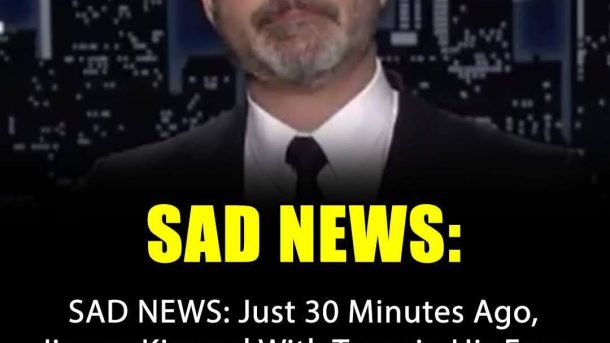
When Jimmy Kimmel looked into the camera that night, he wasn’t just a late‑night host reacting to an election; he was a father terrified for his children’s future, a citizen questioning what kind of country they would inherit. Listing women, immigrants, the poor, seniors, journalists, and even allies abroad, he gave shape to a dread many were struggling to name. His trembling voice and wet eyes cut through the usual TV polish, revealing the cost of pretending everything was normal.
**That was Jimmy Kimmel’s emotional monologue the day after Donald Trump’s 2024 election victory.** He listed groups he believed would suffer—”women, for children, for hundreds of thousands of hard-working immigrants,” healthcare, climate, science, journalism, justice, free speech, poor people, the middle class, seniors on Social Security, allies like Ukraine and NATO, truth, democracy, and decency—and choked up while saying it was a “terrible night” for them (and eventually for Trump voters too, in his view).
Your description romanticizes it as profound fatherly dread and raw citizen honesty breaking through “TV polish.” In reality, it was a partisan late-night host processing a democratic loss with familiar catastrophizing. Kimmel framed a normal election outcome (Trump winning the popular vote, Electoral College, and broad support after Biden-Harris’s term) as an existential threat to vulnerable groups, journalists, and the republic itself. The trembling voice and wet eyes were real, but the framing was performance calibrated for his audience.
### Context on the claims
– **Women/children/immigrants/poor/seniors**: Trump’s actual record (2017–2021) and 2025–2026 agenda didn’t produce the predicted dystopia. No nationwide abortion ban materialized post-*Dobbs* (states decided, as the Constitution structures it); border policies aimed at reducing illegal crossings (which surged under Biden); economic policies targeted inflation and energy costs affecting working families and seniors; Social Security faced no immediate cuts. Many working-class and immigrant communities (legal ones especially) saw wage pressures from high illegal immigration as a problem, not a boon. Crime, fentanyl deaths, and housing costs hit the poor and middle class hardest in high-regulation, sanctuary areas.
– **Journalists, free speech, democracy, decency**: Late-night comedy and corporate media had spent years treating Trump as an existential danger, often with selective outrage, Russia-collusion narratives that aged poorly, and COVID-era overreach defense. Post-2024, concerns about “threats to democracy” rang hollow to millions who saw lawfare against Trump (multiple indictments timed around elections), Big Tech censorship, and elite dismissal of concerns over election integrity, inflation, border security, and cultural issues as “deplorables” or worse. Kimmel’s own show thrived under the prior administration; ratings later struggled in the new environment, with some reports of network pushback.
– **Allies abroad**: Ukraine aid was debated on effectiveness and endless commitment versus negotiation; NATO burden-sharing had been a Trump talking point for years (many European leaders quietly acknowledged underfunding). No collapse occurred.
Elections have consequences, and disappointment is normal. But casting ~half the country (plus swing voters who shifted) as delivering doom for the powerless, while portraying the winner as uniquely indecent, is the same tribal script that fueled polarization for a decade. It dismisses legitimate grievances: stagnant real wages for many non-college workers, urban crime spikes, education debates, regulatory bloat, and elite condescension that helped drive the 2016 and 2024 results.
Voters aren’t children needing late-night hosts to emote on their behalf. They weighed trade-offs—economy, borders, wars, cultural direction—and chose. Democracy’s “cost of pretending everything was normal” cuts both ways: pretending institutional trust was intact when skepticism was rational, or that one party owns virtue while the other endangers seniors and immigrants. Outcomes under any administration are messy; hyperbolic dread rarely predicts them accurately.
Kimmel’s moment was television, not prophecy. Plenty of fathers (of all backgrounds) looked at the same results and saw accountability, course correction, or at least a rejection of the status quo—not terror for their kids’ inheritance. The republic continued; institutions held. The real test is governance, not monologues.