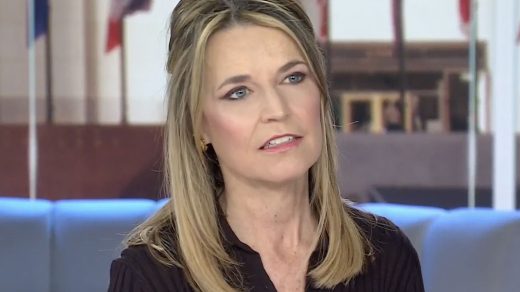
In November 2025, Caroline Kennedy stood beside her daughter Tatiana Schlossberg with the quiet strength that has defined generations of Kennedy women, offering unwavering love and support as her 35-year-old daughter courageously shared her journey with acute myeloid leukemia in a deeply personal essay published in The New Yorker. Tatiana revealed that her diagnosis came just hours after the joyful birth of her second child, Josephine, in May 2024, when doctors noticed an unusually high white blood cell count that led to the discovery of a rare and aggressive blood illness.
The diagnosis was particularly devastating because Tatiana had felt healthy and strong. In her essay, published on the 62nd anniversary of President John F. Kennedy’s assassination, she wrote that she had swum a mile in the pool just one day before giving birth, nine months pregnant, with no indication that anything was wrong. The sudden shift from celebration to crisis was almost impossible to comprehend as she tried to reconcile her active life with the reality doctors presented in those first overwhelming hours after welcoming her daughter into the world.

Tatiana’s medical journey was long and relentless. It began with five weeks at Columbia-Presbyterian Hospital in New York, followed by intensive chemotherapy treatments at home. She underwent two bone marrow transplants, first receiving stem cells from her sister Rose Schlossberg, who turned out to be a perfect match and donated without hesitation. Later, she received a second transplant from an anonymous young donor from the Pacific Northwest, whose decision to join the bone marrow registry made hope possible. Tatiana also participated in multiple clinical trials, including CAR T-cell therapy, as doctors searched tirelessly for treatments that could give her more time.
Throughout every stage, Tatiana was surrounded by an extraordinary circle of love. Her parents, Caroline Kennedy and Edwin Schlossberg, visited her hospital room almost daily, held her hand through the hardest moments, and helped care for her children, Edwin and Josephine. Their steady presence provided emotional grounding during months of uncertainty, fear, and hope.
For Caroline Kennedy, the experience carried a profound personal weight. Having endured significant losses throughout her life — including the deaths of her father John F. Kennedy, her mother Jacqueline Kennedy Onassis, her uncle Senator Edward Kennedy, and her cousin John F. Kennedy Jr. — she drew upon a lifetime of resilience to support her daughter through every appointment, treatment, and difficult conversation. Yet, this time, the heartbreak was uniquely devastating: a mother watching her child confront an illness beyond anyone’s control.
Tatiana’s father, Edwin Schlossberg, stood equally strong beside her. Known for his creativity and quiet wisdom, he helped create moments of normalcy for his grandchildren, reading stories to three-year-old Edwin and holding baby Josephine with tenderness. Even in the most difficult days, he ensured that love and connection remained at the center of family life.
Tatiana’s siblings also played crucial roles. Rose Schlossberg, beyond donating bone marrow, provided constant emotional support and helped care for her niece and nephew. Her brother Jack Schlossberg, who had recently completed dual graduate degrees from Harvard Law School and Harvard Business School, visited often and brought humor and encouragement. After Tatiana’s essay was published, Jack shared it publicly with the simple yet powerful words: “Life is short – let it rip.”
At the heart of Tatiana’s story was her husband, Dr. George Moran, whom she described as perfect, kind, funny, and brilliant. He became her primary caregiver without hesitation — sleeping on hospital floors, managing all medical communications, caring for their children, preparing meals that met strict dietary rules, bathing her when she was too weak, and sitting beside her through nights of physical pain and emotional exhaustion. His devotion embodied the deepest meaning of marriage vows.
In her essay, Tatiana also shared her greatest fears with heartbreaking honesty. She worried that her children might not remember her clearly — that her son Edwin’s memories would blur into stories and photographs, and that baby Josephine, whom she often could not hold due to infection risks, might never truly know her mother’s love. These thoughts, expressed with vulnerability and grace, resonated deeply with readers around the world.
Despite everything, Tatiana remained focused on the present. She cherished small moments, read books with her son, celebrated minor improvements in her health, and expressed gratitude for the love surrounding her. She also reflected on her environmental advocacy, including her unrealized dream of writing a book about the oceans — a reminder of her enduring commitment to future generations.
During this time, Caroline Kennedy, who had served as U.S. Ambassador to Australia from 2022 to 2024, returned home to be closer to her family. Once again, she balanced public service with personal devotion, ultimately prioritizing her role as a mother and grandmother during her daughter’s illness.
Although Tatiana experienced a period of remission after her sister’s bone marrow donation, her rare form of leukemia proved aggressive. During her final clinical trial, doctors told her they might be able to keep her alive for about a year. With extraordinary courage, Tatiana chose to share this truth publicly, hoping her story would raise awareness about medical research, bone marrow donation, and the realities faced by patients with serious illnesses.
On December 30, 2025, Tatiana Schlossberg passed away peacefully, surrounded by love. Her family announced her passing through the John F. Kennedy Presidential Library Foundation, writing that their beautiful Tatiana had passed away that morning and would always remain in their hearts. The message was signed by George, their children Edwin and Josephine, her parents Ed and Caroline, and her siblings Jack, Rose, and Rory — a final expression of the love that defined her life.
In the days that followed, tributes poured in from around the world. Her cousin Maria Shriver remembered Tatiana as valiant, courageous, wicked smart, sassy, and full of light. Readers, colleagues, and friends expressed gratitude for her honesty, intelligence, and the way she used her voice to educate others and make them feel less alone.
Tatiana’s legacy lives on through her award-winning book Inconspicuous Consumption, her journalism for The New York Times, The Atlantic, The Washington Post, and beyond, and most importantly through the love she shared with her family. Caroline Kennedy, now carrying the dual roles of grieving mother and devoted grandmother, will ensure that Edwin and Josephine grow up knowing who their mother was — a woman of courage, compassion, and purpose.
Her life reminds us that meaning is not measured by time, but by connection — and that even in the face of unimaginable loss, love remains the most powerful force of all.